Category: Guerrilla Translation on Guerrilla Translation
Guerrilla Re-translation vs. The Miscommunication Station
It’s things like this that make it all worthwhile.
So, a few months back, we read this interview with Dmytri Kleiner. We talked to Dmytri and shot an email to Marc from Furtherfield, proposing that we translate it to Spanish. Fine. We translated it, proofread it, wrote a Spanish bio for Dmytri, and published it. The works.

So, today, we were charmed and surprised to find that the interview has just been translated back to ENGLISH! We shit you not! And credited to someone named “Google”, taking precedence over our own credits. Actually, this isn’t the first time this has happened, which says much about our ever-rising popularity and world-wide influence. Check out some extracts:
Recently, we received a physical copy of the Manifesto Telekomunista Furtherfield in writing. After reading the manifesto, it is clear that is a shock to the discussion on collaborative initiatives based on the commons.
Commune paper scarce properties would distribute the same way as a distributed network intangible property.
DK: There have always been individuals who are able to overcome their social class. Many entrepreneurs bubble Dotcom gouged party “sales” multimillion platforms, like other individuals devoid of property in other areas.
That last sentence almost sounds like a Beck lyric!
 It’s especially funny, considering that this “Guerrilla Re-Translation” is a pseudo-naturally occurring example of The Miscommunication Station, a Telekommunisten project, which goes something like this: a well-meaning chat room bridging space and culture is, finally, tragically, mediated by some very dodgy automated translation, and “….somewhat overzealous automated content filtering, in-chat advertising (required to recoup investment funding) and processing delays result in a platform that allows you to communicate only with great difficulty.” Ay.
The biggest financial scam in European history
This story brought to mind the opening of “The Corrections” by Jonathan Franzen: “It was the alarm bell of anxiety…ringing for so many days that it simply blended into the background…the alarm bell had been ringing for years”. There’s more to it than that, but (as with the story below) the feeling is familiar – one day, the enormity comes into focus, and consciousness returns, bearing down like an iron clapper.
With that in mind, this article, written by members of the Spanish social justice collective OpEuribor and originally published in Spanish newspaper eldiario.es, offers a simple explanation for why the European Commission is planning economic sanctions against six European financial giants, and, most importantly, how we got here.

Banner for #OpEuribor’s website. The text reads: “Information is your right. Transparency is their duty”.
It all started in June 2011, in the afterglow of the 15 M encampments in Spain’s public squares. Back then, lawyer Juan Moreno Yagüe (@hackbogado) was feeling shaken up over a lawsuit in which he was defending a Sevillian hairdresser. Cajasol, the hairdresser’s bank, demanded a ludicrous amount of interest over a small debt he defaulted on through simple oversight. Juan told me told me he’d found something surprising whilst examining the charts published by the Bank of Spain concerning the Spanish Interbank Index (Índice interbancario español or MIBOR). MIBOR was the reference index for loans before being succeeded by Euribor.
In his investigation Juán discovered that, since the beginning of the subprime mortgage crisis, the MIBOR index showed up as blank on many days. This, according to the Bank of Spain, was due to the absence of interbank lending within the entities that comprised it. The next logical question was whether European banks had also stopped lending money among themselves, given that the European Central Bank’s interest rates were at an all-time low.
Why is interbank lending important? Because Spanish legislation, as evidenced by the Bank of Spain’s own circular notices (a form of legal regulation memorandum), defines the setting of variable interest rates by determining the average interest of the total yearly interbank deposits, initially by Spanish banks, but later expanding to members of the European Banking Federation. (Circular 5/1994 del 22 de Julio, BOE 3 de Agosto de 1994 del Banco de España, modificada por la 7/1999). The interbank exchange rate is employed to meet the following criteria:.
a) That interest rates should not solely depend on the actual lending institution drafting the contract, thus preventing rates from being susceptible to the entity’s influence by virtue of agreements, or parallel conscious practices, with other entities.
b) That the data the index is based on is aggregated following an objective mathematical procedure.
To ensure data objectivity and index neutrality, the standard also requires that there be a minimum of 12 entities performing transactions and data communication from a minimum of three different countries.
So, how were they calculating the index when there were no inter-bank operations? Based on supply predictions? Is Euribor no more than a survey? And if so, what data is the Commission using to determine the manipulation?
To solve these mysteries, we began asking questions about these darned procedures, starting with the commercial bank, Cajasol, who referred us to Thomson Reuters (the corporation responsible for the daily publishing of Euribor rates). Reuters, ultimately, demanded a judicial order before releasing any information. When somebody asks you for a judicial order just to answer a question, it’s because they’re hiding something. We started another round of questions, but this time in writing, to note on record the fact that no one knew or wanted to answer anything; not the banks, not the regulators, nor the European commission, to whom we wrote on numerous occasions alerting them of our findings.
All the documents derived from the investigation are freely available on our webpage, along with downloadable templates so anyone can ask the same questions of their bank. We then publicly launched our campaign: #OpEuribor, which was then echoed by the media.
Perhaps due to the enormity of the potential scam, or the ease with which we receive news of morally dubious practices by banks, we perceived quite a lot of skepticism, especially among banking experts and economists, their faith unshaken in self-regulation mechanisms, supervisors and the market itself. But all these doubts turned into certainty when it was discovered that Euribor’s “Anglo-American cousin” Libor had also been falsified and manipulated.
With these elements in place, the #OpEuribor team readied for the next assault: legal action. And, taking into account the sheer urgency of the foreclosure situation in Spain, we decided to share a template for opposing mortgage eviction proceedings with potential evictees. We called it the #OpOposición. Soon after, we widened our scope by including a new template, this time designed to declare the invalidity of any interest rate derived from Euribor, given that the legal requisites needed for its calculations and publication were not being met.
As we were launching these campaigns and templates, we continued corresponding with various organizations and institutions. Thomson Reuters assured us that they would share the required documents by May 2012, but they never did. The European Commission for Competition, under the supervision of Joaquin Almunia, seemed more concerned with understanding what we required than with facilitating any information, much less acting on it. Lastly, we asked the bank of Spain for the dossier that formed the basis for the above mentioned requirements. A public service worker was about to send us this dossier until, in his own words: he “was prevented from doing so from above”.
Today, after more than two years of investigation and twenty months since we went public, Brussels’ announcement of economic sanctions confirm the validity of our efforts. These sanctions constitute the first partial reaction from European Community authorities to what could well be the biggest financial scam in European history (in Spain alone it would affect 18 million contracts), but we fear that, like its Anglo-American equivalent, they will go no further. This is the reason why we continue providing legal tools to anyone and everyone who decides to confront their bank, given that the interest rate is an essential element of any loan contract. Any wrongdoing involving this rate should be considered as grounds for invalidity due to falsification, because with a sole contracting party responsible for the transaction, there would have been no safeguards for impartiality.
We’ve already seen some successes with our legal procedures, which are also starting to be used in the Libor case, but not by the affected citizens long –we assume that they don’t have the means or assistance offered in Spain by collectives such as PAH or #OpEuribor- but rather by large corporations who have also been cheated by banks.
Our thesis is simple, and goes much further than what the EU is currently contemplating. It’s not that Euribor has been manipulated; it’s that, according to our legal requirements, it never even existed.

The “Hackbogados”: Francisco Jurado (left) and Juan Moreno Yagüe (right)
Article translated by Stacco Troncoso and Jane Loes Lipton – Guerrilla Translation!
Russell Brand’s call to Revolution and the Impact of Popular Culture
Subtitling non-stop speakers, and the role of celebrities in Social Justice and Sustainability:
We subtitled Russell Brands’ epic and controversial rant/ode to Jeremy Paxman’s beard. Stacco Troncoso then wrote a little blog post introducing the video in Spanish and commenting on the role of culture as an integral part of social change from the sixties onward.
We then got asked to translate Stacco’s article into English, to accompany our Spanish subtitling of Brand’s English (nee Cockney) diatribe. Confused yet? In any event, here’s Stacco’s article, along with our subtitles for Brand’s machine-gun verbalization. Worth watching, if you haven’t already and, if you have, well, you may inadvertently learn some Spanish for your troubles.
Given that I don’t watch TV (because I don’t have a TV), and that I avoid the whole celebrity nonsense at all costs (because it’s my choice) – I really have no clue whether Russell Brand is famous in Spain, or not.
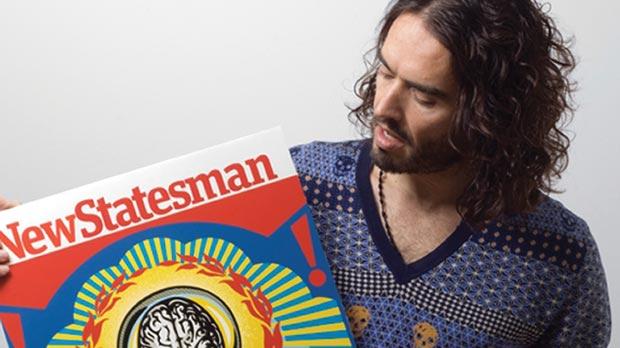
In any case, this recent face-to-face interview, which pits Brand against Jeremy Paxman, a well-known British TV host of the very oldest of schools, has created quite the stir on the Net, and with good reason. Brand is seriously sharp in this video, spitting out pearls like, “(We…) have a disenfranchised, disillusioned, despondent underclass that are not being represented by that political system, so voting for it is tacit complicity with that system and that’s not something I’m offering up.”, and “The planet is being destroyed, we are creating an underclass, we’re exploiting poor people all over the world and the genuine, legitimate problems of the people are not being addressed by our political class.”, in the astonished face of Paxman, lounging in his armchair. What other “scandalous” celebrity has said anything like this?
I subtitled this into Spanish, and believe me, it was no mean feat. Brand churns it out like loaves and fishes, with hardly a pause between the interruptions and verb sparring with his interviewer (who, it must said, gives as good as he gets). We warned our Spanish audience: these subtitles are only for the fastest of readers. We tried to condense them as much as possible without losing Brand’s fire. The response has been overwhelming and gratifying.
(Hit the “close captions” button on the lower right if you want to see the Spanish Subtitles)
The critics wasted no time at all in coming down hard on this piece, on both the conservative and the progressive sides. Above all, what drew my attention was this, coming from Jerome Roos (editor of Reflections on a Revolution), in my opinion one of the best online publications in existence. In his review of the interview, Roos points out:
“Ultimately, it’s not Russell Brand who gives me hope. Even though I greatly enjoyed his interview, I frankly don’t care very much what this celebrity tells the BBC or what he writes in the New Statesman. It’s the fact that his heartfelt revolutionary desire still resonates with millions that truly thrills me. I wouldn’t predict a revolution just yet. But that’s because I know it’s already begun.”
I also find Brand’s interventions a lot of fun, while at the same time I disagree with some of his commentary. For one thing, I really don’t think we need a “centralized administrative system” at this point. What I find most remarkable is simply the appearance of a “celebrity” of working-class origins reflecting the widespread anger felt the world over. At times, watching the emergence of the global movement (or resurgence, depending on your point of view, we don’t want to offend anyone…) in these last three years, I miss the connection between the revolution and the popular culture, a true hallmark of the sixties and the rise of punk. Where is the MC5 of today? The rise of Black Power, and its links to Free Jazz, to Albert Ayler, Archie Shepp…Frank Zappa, talking about the Watts riots… The Clash, Patti Smith… Where is the soundtrack to this revolution?
I don’t see anything that compares to the international reverberation felt in the musical, artistic and spiritual revolution of the sixties/seventies. We’re talking about a time when the politics and the popular culture of the day were inextricably woven together with a common desire: change. It could be argued that the nineties gave us a comparable musical revolution, but, what’s happening now? Why hasn’t there been a Rage Against the Machine union, to play at Occupy (granted, they played on Wall Street ten years earlier…)? Are we going to see a new musical movement that reflects, rather that “leads”, the gestalt of the Occupy, 15M, Turkish, Brazilian and Arab Spring movements? A new Punk Rock closer in spirit to a DIWO (DoItWIthOthers) ethic than the DIY of yore?
I’m not going to compare the artistic merits of Brand with those of the aforementioned artists (Inspector Callahan says it best: “Opinions are like assholes, everybody has one”). But it still seems important to take note of the repercussions their actions have on the popular consciousness. How many other celebrities are sticking themselves out like he is?
Brand seems like a good guy, charming and funny. He’s got soul, he’s sharp…and he says it well in the video, “There’s gonna be a revolution. It’s totally going to happen. I ain’t got a flicker of doubt, this is the end. This is time to wake up.”
This revolution needs more art, more accessibility, more Rock and Roll and a lot more jocularity. Let’s play with what they can’t possibly understand, as much as they may try to undermine it.
Text by: Stacco Troncoso
Medialab Prado: 10 Years of Social Innovation
The following article, written by our good friend Bernardo Gutiérrez, looks at MediaLab Prado, a very special hybrid space in our hometown, Madrid. This translation features additional original content by the author (not originally published in the Spanish media article), citing MediaLab as one of the spaces where the initial gestalt of the early 15M movement was collaboratively created. It has subsequently been republished in Shareable magazine, and the website for The 2013 Economics and the Commons Conference.
 Image adapted from an original at Nómada Blog
It seems that “lab” is the word making the rounds amongst innovation buffs these days . Maybe the term “laboratory” isn’t the most appropriate analog, given that its dictionary definition, “a facility that provides controlled conditions in which scientific research, experiments, and measurement may be performed”, falls short in describing the present day use of “lab”, and what these spaces are about.
This divergence of terms originated with the foundation of the first Media Lab at the Massachusetts Institute of Technology (MIT), in 1985, a space characterized by its convergence of technology, multimedia art and design. However, in recent years, MIT’s model seems obsolete and at a standstill, especially when compared to a newer and more relevant generations of labs. Madrid’s MediaLab Prado, currently celebrating its tenth anniversary at a new location -la Serrería Belga- stands out as the premier reference points for labs worldwide.
So, what is a lab, exactly? A technical laboratory? A multidisciplinary space open to the public? Rather than nailing down one definition, it may be better to observe some of these labs worldwide, and notice the local idiosyncrasies. Any city eager to reinvent itself and adapt to the networked society invests in an urban lab, such as the Laboratorio Procomún in Rosario, Argentina. Cultural centers like, for example, Ljudmila Media Lab (Liubliana, Slovenia) are currently mutating into places where the artistic paradigm goes beyond art objects. Digital art spaces, such as the prestigious Eyebeam in New York, are recycling themselves following collaborative models. All of the above share a common source of inspiration: Medialab Prado Madrid.
This could likely be said about many other institutions, labs, universities and cultural centres around the world. Any city would be proud to host something like a Medialab Prado. What is it about this media lab’s DNA that makes it so desirable in areas as diverse as technological innovation, culture and civic participation?
 The key to MediaLab Prado’s success may be held in a definition first proposed by José Luis de Vicente: “it’s a community incubator”. In fact, both words, “community” and “incubator”, have been the trend amongst Silicon Valley circles and community managers alike. It’s also worth noting that, as terms, they are seldom seen together. And, as Juan Freire and Antoni Gutiérrez Rubí express in their book “Manifiesto Crowd”, in the age of networks, innovation walks a different path. “The factories that were churning out companies in the 20th century are dead. The 21st century is witness to the birth of spaces for collective innovation”. An incubator lacking a community will never be enough. This is the reason why a lab – both in its physical and digital realms – needs to be an open platform. And that is precisely why MediaLab Prado has become such a a relevant space for coexistence, innovation and mutual co-creation.
MediaLab Prado is both a physical and a digital platform. Physically, it’s a space where anyone can walk in, while online it functions as a laboratory for connecting ideas. MediaLab Prado is an interdisciplinary workspace for creation and innovation. And here’s an important detail: its strength doesn’t reside in its own programming, put together by stewards and specialists. It lies instead in the various working groups, projects and encounters collectively cooked up by the citizen communities who frequent Medialab’s headquarters, or participate in its digital channels. Every Friday, for example, there’s an open lab where anyone can collaborate with anyone else in the creation of new projects.
Another defining feature is its focus on prototyping – another digital culture and IT term. Prototyping culture doesn’t seek definitive or finished products; instead, it prefers to function in a transparent and collective manner, employing open projects in a constant, citizen-fueled process of improvement. All in all, MediaLab Prado has become a catalyst for culture, technology, networks, science, education, and innovation.
Evidently, MediaLab Prado’s official areas of competence are both necessary and relevant. Interactivos? (a laboratory for creative and educative technological applications) Visualizar (data and citizenship visualization) or its Commons Lab (transversal investigation centered on the Commons) are clear international reference points. Additionally, self managed working groups, such as “Funcionamientos: Diseños abiertos y remezcla social” (Functioning: Open design and social remixes) or “Género y Tecnología” (Genre and Tech) are just as influential. MediaLab Prado cannot simply be described as a “Cultural Centre”, as it is so much more than a building populated with works of art or technological infrastructures. It’s a connector, a hub, a platform for the collective intelligence that is transforming industry, economics, technology, education and art throughout the whole planet.
In fact, it’s been one of the citizen hubs where civic activism slowly forged the 15-M/ Indignado movement that heralded Occupy Wall Street and the global revolution. To give an example, in early 2011, while Spanish mass-media ignored collectives such as Democracia Real Ya or Juventud sin Futuro, the Redada Encounters in MediaLab Prado transformed an incumbent and collective -as opposed to hierarchical- form of web activism into a palpable phenomenon. Open code practices, now essential to modern activism, have always been central to MediaLab Prado.

The challenges in this new chapter in MediaLab Prado’s history are undoubtedly many. One of the most important will be channeling corporate innovation and navigating new economic paradigms. At a time in which The Economist, no less, dedicates its front page to the sharing economy, MediaLab Prado is in a better position than many. By developing its own trajectory, it could well become a great catalyst for the future networks of innovation, open culture and citizen intelligence that will soon be needed in Europe. In fact, connections established within MediaLab Prado in these last few years have given rise to projects and citizen start-ups such as MLP, Play the Magic, Open Materials, Hackteria, Lummo, Muimota, Máster DIWO, Ultralab and Data Citizen Driven City, amongst many others. Certain working groups, like IoT Madrid (Internet de las Cosas) or exhibitory projects such as Impresoras 3D: Makerbot y Reprap clearly lead the way to the future.
Living at a time when most of the world’s population is concentrated in cities, urban innovation may well be MediaLab Prado’s greatest challenge. It’s no coincidence that some of the most influential labs in the world, such as CityLab in Cornellà, Barcelona or the BMW Guggenheimlab in New York, are focusing their efforts on urban innovation. This is the reason why Medialab Prado’s new location at the heart of historic Madrid is so essential. Its urban vocation is most evident in working groups such as Ciudad y Procomún, the new Ciencia Ciudadana (Citizen Science) station or projects like Hacer barrio or Quality Eggs.
The history of Barrio de las Letras -or “writer’s district”- where Medialab Prado is currently located, is another key facet. The scientific institutions of the 18th Century were responsible for the first major developmental push in Madrid, which then led to the expansion of Barrio de las Letras. During this time, the city witnessed the construction of the Botanical Garden, the Astronomical Observatory, the Academy of the Sciences (which now houses the Prado Museum) and the General Hospital (currently housing the Reina Sofía Museum) and the “Gabinet de Máquinas” a demolished Industrial Engineering museum from that era and situated quite close to the old Army Museum. All of this frantic building activity took place in less than 3 decades. MediaLab Prado´s new location in the Serrería Belga, an old abandoned industrial building, is another telling metaphor of an industrial era that left so many urban carcasses in its wake.
In summary, the conversion of an old, abandoned, industrial space into an citizen innovation lab in the same area where literature and science flourished in centuries past, is a promising metaphor indeed. MediaLab Prado is one of the closest examples of the new Partner State proposed by Michel Bauwens, founder of the P2P Foundation. A State which guarantees the necessary space and resources to activate a P2P society’s collective intelligence for the improvement of the Commons.
Guerrilla Translation on adopting the Peer Production License
We’re reposting this article Stacco wrote for the P2P foundation blog regarding our adoption of the Peer to Peer License. You can find the original here.
After discussing the proposal within our team, we at Guerrilla Translation have decided to license our translated content under a Peer Production License.
Extracted from “The Telekommunist Manifesto” as authored by John Magyar, B.A., J.D. and Dmytri Kleiner, the Peer Production License (henceforth PPL) is somewhat of a hybrid between a Copyleft and Creative Commons license. Kleiner himself describes it as a “Copyfarleft License”. The standout feature which distinguishes it from a standard Creative Commons non-commercial license is that it’s geared to create counter-economic networks for ethical economy players.

Beta widgets for the PPL
How does it work?
PPL can be viewed as an answer to the some of the most common criticisms of both Creative Commons and Copyleft licenses.
In very broad terms, Creative Commons licenses, effectively (and ironically) delimit material from the Commons. They are, in fact sharing but not “commons” licenses, as they only allow the license holder to potentially profit and make a livelihood from their creative work. Copyleft, on the other hand, goes for broke in allowing not only reproduction and modification of the work, but also monetization without express consent for the holder.
The problem with Copyleft is that it effectively won’t stop any large, exploitative corporations or even regimes from appropriating and profiting from creative work originally produced within the Commons and dominating the open source economies which are built on the free labour of volunteers;
So, how do we keep this type of work within the Commons, while adding value and sustainability to those contributing to it?
The answer is by using a type of license that both creates a commons, but also favours the creation of an ethical economy of commons-oriented and commons-friendly market and other entities. The Peer Production License does this by opening up the commercial aspect of the ubiquitous Creative Commons ‘Attribution-NonCommercial-ShareAlike’ and shutting down the possibility of profiteering by corporate agents.
To quote the license text (extracted from section 4 “Restrictions” subheadings “c” and “d”):
“c. You may exercise the rights granted in Section 3 for commercial purposes only if:
i. You are a worker-owned business or worker-owned collective; and
ii. all financial gain, surplus, profits and benefits produced by the business or collective are distributed among the worker-owners
d. Any use by a business that is privately owned and managed, and that seeks to generate profit from the labor of employees paid by salary or other wages, is not permitted under this license.”
Why have we chosen it?
As expressed in our Founding Principles, Guerrilla Translation is more about sharing than merely translating. Translation is the mechanism that enables us to network with authors and share stimulating ideas internationally. On top of sharing the results of our work in an open and freely distributed manner, we want to encourage similar collectives and players to benefit from them.
We believe in the license and want to promote it by way of example. We’re also in a very particular and low risk position to do so, as the project is still in its infancy and principally features adaptations (ie translations) of original material which is itself licensed by the authors we translate. In this way, our translations can be seen a structure wrapped around an invisible center. The structure (translation) is free to experiment with the license, while the invisible center (the original) anchors it to whatever licensing arrangement the authors may have chosen.
But won’t someone take advantage of you?
It depends on your definition of “advantage”. If a content curator is running valuable material while obtaining income from, say, advertising or having an Amazon store on their webpage; and if this person decides to run our translations and, thus, have them improve his or her chances of earning an income, we feel that this would be an advantageous situation for us, too.
Our understanding of PPL is that it fosters trust among peers. We want to encourage networks of gratitude and reciprocity (though not necessarily monetary) among the Commons. Our opinion is that gratitude is earned by acts of generosity and trust among friends.
Let’s analyse a hypothetical example of how to build this trust. Imagine that a newspaper which functions as a co-op and pays all its collaborators decides to republish our work without any sort of monetary compensation for us or the original authors. The license would allow them to do so. In an event like this, we’d consider their action to be discriminatory behaviour, but in terms of consequences, it would only affect the reputation of said newspaper within the meritocracy of the Commons. We think that this sort of reputation-based deterrence is very interesting, even if it lacks any sort of legal instruments, as it can foster better relations and a “watch each other’s backs” dynamic regarding unethical practises within the Commons and P2P movements.
PPL Concerns and Criticism
Our involvement with the license is not a passive one by any means. By being willful guinea pigs, we hope to encourage dialogue and meaningful criticism of it. The P2P wiki features some critiques of Kleiner’s original proposal and, since the announcement of our adaption of the PPL in social media, we’ve received some ourselves.
Here’s Josef-Davies Coates from United Diversity:
“I kind of like the sentiment that work cannot be used by horrible greedy people out only for themselves, but think the current version is far too restrictive and inflexible. There are MANY not-for-private-profit legal structures/ models that are not worker owned businesses nor collectives, e.g. charities/ ngos/ non-profits/ community benefit societies/ CICs, multi-stakeholder co-ops etc etc. [....] Also, not all value is created by workers anyway – the old fashioned Marxist idea that it is is just plain wrong imho – what about the multitude of other stakeholders that any organisation has? local/ wider community, customers, suppliers, investors, local/ national authorities etc. And what of ecosystems upon which all are utterly dependent in the first place?”
Lisha Sterling from Always Sababa
“Who is to determine what organization is “exploitative” and which is not? I know a lot of Non-profits which are quite exploitative. I had a job at one such org as a young mother that paid me minimum wage to work as a secretary. I earned less than a babysitter cost!! Remember also that when you tie something down *too* tightly, it just pushes people to break the rules. That goes for the Marxist as well as for the Capitalist”
Where do we go from here?
Our answer is that, similar to how PPL attempts to answer a question and find a third way amongst contradictions, a new 2.0 version of the license can be developed based on these and other critiques.
This new version (tentatively dubbed the P2P License), while acknowledging Kleiner’s visionary proposal, would aim to solve some of these concerns, while also employing a syntax more concordant with our vision of the Commons and where the style of language doesn’t become a factor of exclusion. It is important for us to include those that share our values while perhaps not our analysis. Guerrilla Translation’s semantic stance is post-capitalist, rather than merely “anti”, and it is important for us to reflect this train of thought in our choice of license.
We have begun discussions with Creative Commons itself regarding the incorporation of the PPL License (and of whatever future P2P License takes shape). Future developments will include a Common Deed and a simple website with a FAQ and links to adoptees of the license.
For the time being, it’s very gratifying to open the way for mutual support systems, both for culture and livelihoods in the Commons. It’s also worth mentioning that Sharelex, the legal collaborative construction tool, is also discussing an adaptation of the license, and we hope to hear from them soon.
These and other licenses are not the ultimate answer to the many contradictions and problems that have arisen (and are sure to arise) within the Commons and sharing movements, but, as Michel Bauwens has stated: “The aim here is not to prevent all “leaks”, but to make a statement by means of a hack, and to implement a strategy”.
